Influencer Story: Rise to Fame
- 4.5
- Rating
- 1.00M
- Installs
- Free
- Price

 Analysis by App-foxy
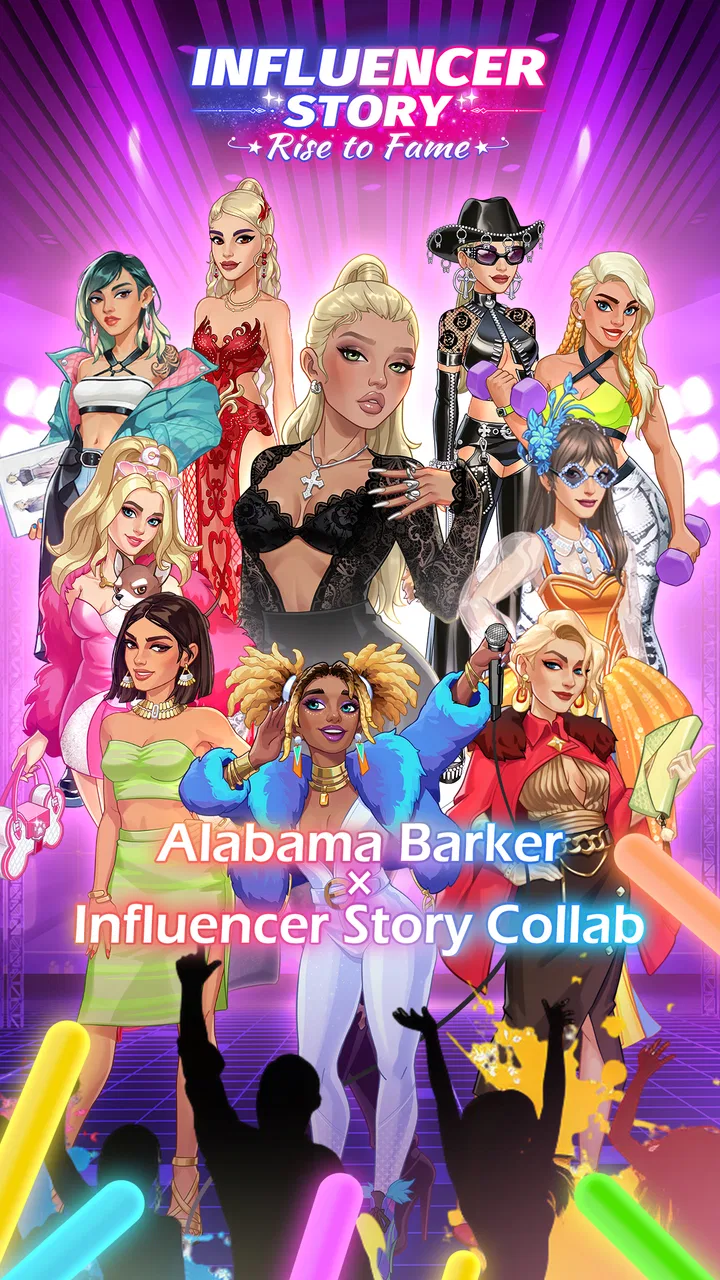
I went into Influencer Story: Rise to Fame expecting a light role-playing game built around the fantasy of becoming a recognizable online personality, and that is exactly the space it occupies. It is free to play, aimed at a Teen audience, and developed by Future Fusion Technology Limited. The central appeal is not tactical combat or a huge open world; it is the feeling of guiding a character through a climb toward popularity, making choices and watching a personal story develop around that ambition.
That distinction matters when deciding whether to install it. If you enjoy character-focused progression, fame-themed storytelling, and short sessions that let you make a little progress without committing to a long play period, this is an easy game to understand. If you are looking for deep role-playing systems, demanding battles, or a simulation with detailed control over every part of an influencer business, you may find it too narrow. I would describe it as a casual, narrative-led role-playing experience rather than a full social-media simulator.
The game has built a sizeable audience, with over a million installs and an average rating of 4.5 from around seventeen thousand ratings. Those figures suggest that its basic premise connects with many players, but they should not be treated as a guarantee that it will suit every taste. The most useful question is whether its particular mix of progression and celebrity fantasy matches the way you like to play.
You May Also Like

 Blood Strike: 2.5 Anniversary
Blood Strike’s Loadouts Turn Every Drop Into a Tactical Gamble
A close look at Blood Strike’s custom loadouts: how fast access to signature weapons reshapes its battle royale rhythm, rewards preparation, and narrows the gap between fights.

 Pandora - Music & Podcasts
Pandora’s Music Is Easy to Start, but Harder to Recover
Pandora’s strength is its low-effort path from a seed to a station. Its weak spot is how much confidence it asks you to place in connection, setup, and quiet recovery.

 8 Ball Pool
 Is Built on Rivalries, Rematches, and Routine
A close look at the rivalries, rematches, shared routines, and unanswered safety questions that turn a quick pool match into a persistent mobile community.

 Samsung Music
’s Quiet Strength Is Playing What You Already Own
Its reach comes less from spectacle than from dependable access to a personal library. That simplicity is both the app’s strongest retention engine and its ceiling.

 AccuWeather: Weather Radar
AccuWeather Review: A Quick, Clear Forecast for Everyday Decisions
For everyday plans, the best forecast is the one you can understand quickly. AccuWeather makes rain timing, radar, and local conditions easy to act on, with a few trade-offs.

 Hill Climb Racing
Why Hill Climb Racing Still Turns Crashes Into One More Run
A tiny car, a bumpy hill and one more upgrade: Hill Climb Racing keeps resurfacing because its simple chaos makes every near-miss feel personal.
More From Our News Desk



What to consider before choosing it
My first decision criterion would be your preferred pace. This is the kind of game I would open while taking a short break, waiting for an appointment, or relaxing before bed. Its appeal comes from returning to an ongoing rise-to-fame storyline rather than mastering complicated controls. That makes it approachable, but it also means players who want constant challenge may eventually feel that the experience is more about steady advancement than skillful execution.
The second criterion is how much you value theme. The influencer setting gives the game a clear identity. Instead of placing you in a familiar fantasy kingdom or a conventional crime story, it asks you to engage with the modern idea of building an audience and turning attention into status. I found that theme more important than any individual action because it gives context to the progression. Each step feels connected to the character’s public image rather than being a random collection of upgrades.
The third question is whether you are comfortable with a free game that includes optional purchases. The download costs nothing, but in-app items range from $0.99 to $99.99. That wide range is worth keeping in mind before you begin, especially if you are playing on a shared device or allowing a younger player to use it. I recommend deciding in advance whether you will spend anything. Having that boundary makes it easier to judge the game on its actual entertainment value instead of feeling pushed to accelerate progress.
Age suitability is another practical consideration. The Teen rating means I would not choose it automatically for a young child, even though the celebrity-focused premise may sound harmless. Parents should check the game directly and consider whether its themes, presentation, and purchase options fit the player. For teenagers and adults who enjoy story-based mobile games, the rating is less of a concern, but it still signals that this is not positioned as a preschool or early-childhood experience.
Device compatibility is relatively broad: the game runs on Android 7.0 or later. That makes it a realistic option for people who do not own a recent phone. Still, compatibility alone does not tell me how comfortable a particular device will feel during longer sessions. If your phone is older, I would begin with short play periods and pay attention to responsiveness and battery use before deciding whether it deserves a permanent place on your home screen.
The appeal of building a public persona
What gives the game its strongest personality is the idea that progress is visible. The character is not simply becoming stronger in an abstract sense; the fantasy is becoming more known, more influential, and more established. I enjoyed that framing because it changes the emotional reward. A conventional role-playing game may make me happy when I unlock a stronger ability, while this one aims for the satisfaction of seeing a personal journey move closer to recognition.
That setup also makes it easier to play in small pieces. I do not need to remember a complicated map or reconstruct a battle strategy after several days away. I can return, check where the character stands, and continue the climb. For a mobile game, that accessibility is a real strength. It is particularly useful for players who like progression but do not want a game that demands a large uninterrupted block of time.
Another advantage is the clarity of the fantasy. Some role-playing games offer dozens of systems before explaining why I should care about them. Here, the broad objective is immediately understandable: help a would-be influencer move toward fame. Even if you have never played a game in this style, the premise gives you a simple mental model for what your progress means.
The trade-off is that the subject can feel less timeless than a traditional adventure. A fantasy hero or space explorer can support almost any type of story, while an influencer narrative depends heavily on whether you find online popularity interesting. I found the modern setting refreshing, but I can also see why someone who dislikes social-media culture would have little patience for it, regardless of how smoothly the game presents its progression.
Where this game is a better fit than familiar alternatives
Compared with action-heavy role-playing games, this title is better suited to players who want the role-playing label without reflex-based pressure. You are not choosing it for intense combat practice or a demanding control scheme. You are choosing it for a character journey built around advancement and recognition. That makes it a calmer alternative for someone who likes the structure of role-playing but finds battle-focused games tiring.
Compared with pure story apps, it offers a stronger sense of participation. Reading a fixed narrative can be relaxing, but it leaves little room for the feeling that your input matters. The role-playing format gives the journey a more active quality. Even when the experience remains casual, I feel more involved when I am guiding the direction of a rising personality rather than simply moving through chapters.
It also has an advantage over broad life simulators for players who prefer a focused theme. Life-simulation games can become cluttered with work, relationships, housing, schedules, and many unrelated responsibilities. This game narrows the fantasy to the path toward fame. That focus makes the premise easier to follow and helps short sessions feel purposeful.
A useful way to play is to treat each visit as a small planning exercise rather than rushing through every available action. I found that paying attention to what the current stage of the story seems to emphasize helps maintain the feeling of progression. Even without turning the game into a spreadsheet, I would avoid tapping through automatically. The theme works best when I connect each choice or advance with the larger goal of shaping a public identity.
Small-session strategy and practical habits
My most useful habit was separating “progress sessions” from “story sessions.” During a quick break, I would focus on moving forward efficiently and stop once the immediate objective felt complete. When I had more time, I would slow down and pay attention to the character’s situation and the direction of the narrative. This prevents the game from becoming a repetitive tapping routine and makes the story elements easier to appreciate.
I also recommend resisting the urge to spend simply because an item appears to promise faster advancement. The free entry point is one of the game’s main advantages, and spending should be a deliberate choice rather than a reflex. Before buying anything, I would ask whether it changes how I play or merely shortens a wait. That distinction is especially important in a progression game, where the act of gradually improving is part of the entertainment.
A third tip is to use the game as a low-pressure alternative, not as your only role-playing experience. I enjoyed it more when I accepted its casual scale. Expecting it to replace a large console-style adventure creates the wrong comparison. Expecting a themed mobile story with ongoing advancement makes its strengths much easier to notice.
For an everyday example, imagine having fifteen minutes during a commute or lunch break. This is the sort of situation where the game makes sense: you can check your current progress, make a few decisions, and leave without needing to memorize a complex combat build. Later, you can return to the same storyline. Someone who instead has an uninterrupted evening and wants a deep world to explore may be better served by a larger role-playing title.
Where another category may suit you better
I would not recommend this as the first choice for players who want competitive multiplayer, precise action, or a highly strategic combat loop. Its influencer theme may sound unusual, but unusual does not automatically mean mechanically deep. If your enjoyment comes from testing skill against other players or solving difficult tactical encounters, a combat-oriented role-playing game will probably provide more lasting challenge.
It may also be the wrong fit if you want complete control over an avatar’s appearance, schedule, relationships, and environment. The fantasy of becoming famous is present, but that does not make the game a full life simulator. Players who want to design an entire virtual existence should look toward simulation games instead. Those alternatives may offer more freedom, while this one benefits from keeping attention on the rise-to-fame premise.
Story-first players should consider how much interaction they need. If you prefer a carefully authored narrative that unfolds almost like a television series, an interactive story app may feel more polished or emotionally focused. This game’s role-playing structure adds progression, but that can also interrupt the flow of a purely narrative experience. I would choose it when I want to do something with the story, not merely read it.
There is also a patience question. Free progression games can be enjoyable precisely because they give me a reason to return, but that rhythm is not for everyone. If you dislike waiting, repeated advancement steps, or the temptation to pay for convenience, the free model may become a source of irritation. In that case, a paid game with a clearer beginning and ending could be a better value, even if its initial price is higher.
Version, purchases, and the cost of changing your mind
The current version is 1.4.2, which is the release I would use when judging the present experience. That matters because mobile games evolve, and a later session may not feel identical to an early one. I would keep the app updated through the normal platform process so that I am playing the current build rather than relying on an older installation.
The financial commitment is flexible but potentially significant. You can start for free, which lowers the cost of trying it, yet the highest-priced individual purchase reaches $99.99. I would not describe the game as expensive to sample, but I would describe it as a title that deserves purchase discipline. A good personal rule is to play long enough to decide whether the core loop is enjoyable before considering any optional item.
There is a hidden cost to switching away from any progression game: attention. Even when no money is spent, you may have invested time in learning the rhythm, following the character’s rise, and building an expectation of what comes next. I would therefore give it a fair trial based on several short sessions rather than deleting it after a few minutes. At the same time, do not let that investment pressure you into continuing if the influencer theme never becomes interesting.
For parents, the practical cost of switching is even simpler: supervision. A Teen-rated free game with optional purchases is not something I would hand over without discussing spending rules. Disabling or restricting purchases at the device level is a sensible precaution, particularly when more than one person uses the same account. That is not a criticism unique to this title; it is a necessary part of managing any free-to-play game with a broad purchase range.
Who should install it, and who should skip it
I would recommend it to casual role-playing fans who like a contemporary premise and want progress they can revisit in short sessions. It is also a good candidate for players who are curious about games centered on online popularity but do not want the complexity of a full business simulator. The focused theme, free entry point, and accessible Android requirement make it easy to test without making a major commitment.
I would be more cautious about recommending it to players who need deep systems to stay engaged. If you judge every role-playing game by combat variety, character builds, exploration, or competitive depth, this may feel lightweight. Likewise, anyone who finds the influencer concept unappealing should not expect the role-playing label alone to overcome that reaction. The theme is not decoration; it is the reason to choose this game.
My recommendation is to try it with a clear expectation: this is a casual fame-focused role-playing journey, not a replacement for a large-scale adventure or a detailed life simulator. Start free, set a spending limit, and give the progression enough time to show whether the character’s climb holds your interest. If you enjoy checking in, making steady progress, and watching a modern public-persona story take shape, it is an easy game to keep around. If you want demanding mechanics or complete simulation freedom, choose a different category instead.
After spending time with it, I came away thinking its best quality is focus. Future Fusion Technology Limited has built the experience around one recognizable fantasy, and that makes the game approachable even when you only have a few minutes. The limitations are tied to the same choice: the narrow theme and casual pace will not satisfy everyone. For the right player, though, the strongest reason to play is its simple, repeatable fantasy of guiding a character from obscurity toward fame.
FAQs for Influencer Story: Rise to Fame
01What is Influencer Story: Rise to Fame about?
Influencer Story: Rise to Fame is a mobile simulation and lifestyle game centered on building a social-media career. You create and customize a character, choose outfits, produce content, interact with other characters, and work toward becoming a recognized influencer. Progress generally comes from completing activities, making choices, improving your image, and unlocking new opportunities, locations, and story developments.
02Is Influencer Story: Rise to Fame free to download and play?
The game is generally available as a free download, allowing you to begin playing without an upfront purchase. However, free-to-play games commonly include optional in-app purchases for premium currency, clothing, energy, boosts, or other conveniences. Some content may also be connected to advertisements, waiting timers, or limited resources, so it is worth checking the store listing and your device’s purchase settings before downloading.
03Can I play Influencer Story: Rise to Fame offline?
Some basic parts of the game may remain accessible without a continuous internet connection, but the experience can be limited when you are offline. Features such as advertisements, cloud synchronization, events, updates, account services, or purchases may require connectivity. For the most reliable performance, especially when loading new story content or saving progress, it is recommended to play while connected to a stable Wi-Fi or mobile-data network.
04Does the game include character customization and story choices?
Yes, customization and decision-making are important parts of the experience. Players can usually shape their influencer’s appearance and style through clothing, accessories, hairstyles, and other visual options. Story or dialogue choices may also influence relationships, activities, and how the character’s career develops. The available options can depend on progression, in-game currency, or premium items, so not every choice may be unlocked immediately.
05Is Influencer Story: Rise to Fame suitable for children?
The game may appeal to younger players because of its colorful presentation, fashion elements, and accessible simulation mechanics, but parents should review the age rating and privacy information before installation. Social-media themes, advertising, in-app purchases, and interactions between characters may not suit every child. If children use the app, parental controls and purchase restrictions are advisable, particularly on shared phones or tablets.
Pros
- Simple tap-based gameplay is easy to learn and play casually.
- Frequent goals give each session a clear sense of progress.
- Fashion and lifestyle choices add variety to the influencer journey.
- Bright visuals and character designs suit the game’s social-media theme.
- Short play sessions work well for quick entertainment on mobile.
Cons
- Progress can feel repetitive after completing similar tasks repeatedly.
- Some upgrades may require considerable time or in-game resources.
- The story offers limited depth compared with more narrative-focused games.
- Ads may interrupt play or be needed to claim certain rewards.
- The game may appeal less to players seeking strategic or challenging gameplay.

Influencer Story: Rise to Fame
Gallery